This debate was not nearly as long as it should have been. But this debate is one of the few of its kind, given that King James Onlyist by and large are not willing to engage in public moderated debate. However, I think this debate clearly distinguishes between the positions and will prove to be very helpful to anyone interested in the transmission of the text and questions concerning Bible translation.
Showing posts with label Textual Criticism. Show all posts
Showing posts with label Textual Criticism. Show all posts
Monday, February 07, 2011


Monday, April 26, 2010
A Critical edition of the Qu'ran?

It's about time! Finally, a critical edition of the Koran. Now, honest Muslims and those researching the Islamic faith can look at the real textual history of this book. I believe this will turn out to be a very useful work for both Muslims and non-Muslims alike. However, I can only imagine the uneasiness (and that is probably an understatement) of Muslims who will hear about this work, as i've heard plenty of Muslims claim that there are no textual variants in the Koran. Perhaps this will lead Muslims to reevaluate their view of inspiration? Certainly, Christians have to deal with a similar struggle, as the Bible is not without its critics. The difference is, we publish our own critical editions of the Bible for all to see. We have nothing to fear. Bring in the evidence and publish it. And if anyone wants to argue that textual variants disprove inspiration, then let's talk about it.
The sad thing is, most Muslims will probably not carry this type of attitude. It seems that only the "revisionist" Muslims are into this sort of thing. Its an amazing thing when a group wants to suppress the evidence. But its another thing to be a follower of the one who claims to be "The way, the truth, and the life." (John 14:6)
You can read the full Boston Globe article HERE.
(ht: Evangelical Textual Criticism)
Monday, October 05, 2009
Textual Criticism and the Book of Mormon

It may seem a bit strange for a Mormon to be speaking about textual variants in the Book of Mormon for the simple reason that Mormons have long charged the Bible with corruption. In fact, one of the most common Mormon claims is that "We believe the Bible to be the word of God as far as it is translated correctly." Unfortunately, "translated" is confused with "transmitted," as i've heard Mormons time and time again assert that the Bible has been "translated so many times that we are not sure what it might have originally said." And so they argue, "That's why we need the Mormon Scriptures, as well as modern prophets."
Thus, the Mormon arguments are made without considering the consistency of their own position. That's where The Book of Mormon: its earliest text comes into play. This is no work of LDS apostates. It is written by Royal Skousen, a professor of linguistics and English language at Brigham Young University. And what's interesting about this whole thing is that Mormons have, for years, criticized the accuracy of the Bible's transmission without having looked in their own backyard.
Anyone who has studied Mormonism is or should be aware that the Book of Mormon is not the textually pure book that Missionaries at your door have made it seem. In fact, I don't think there has ever been a time where I have not asked a missionary, "Do you believe the LDS Scriptures have ever been altered in any way?" I don't think i've ever gotten a "yes" to that question. To most Mormons i've talked to, the LDS Scriptures are infallible in both content as well as transmission. Sure, no one can expect a book to be free of any and all errors; whether typographical or other easily-resolvable issues. But would an 800 page book need to be written if this were the case? Perhaps Mormon textual criticism is not as polished as most Mormons think it is.
Am I arguing that the textual variants in the book of Mormon deem it impossible to get back to the original? Probably not. But am I arguing that perhaps Mormons have been a bit inconsistent in arguing against the Bible's textual tradition? Absolutely. I don't know when or if I am going to ever have the time to check out this book. But I do hope to see some more reviews of this work as well as future comparative studies between the BoM and the Bible's textual tradition.
(ht: Evangelical Textual Criticism)
Thursday, February 26, 2009
Saturday, February 21, 2009
Wednesday, February 11, 2009
Friday, January 09, 2009
Muslim vs. Christian debate on the authenticity of the New Testament
This is Nadir Ahmed vs. James White on the authenticity of the New Testament. Although this debate was a tad unbalanced (as James White is far above Nadir in his argumentation), Nadir displays a good example of the type of argumentation that you might hear from a typical Muslim on the street. But even if you rarely encounter Muslims, you will find that a lot of their arguments are borrowed from skeptics and atheists in attacking the New Testament's authenticity. Either way, this is a great way to learn how to better defend your faith against unbelievers!
Friday, May 02, 2008
Dan Wallace vs. Bart Ehrman: Is the New Testament Reliable?
Recently, best selling author of "Misquoting Jesus," Bart Ehrman, debated Greek scholar, Dan Wallace, on the textual reliability of the New Testament. Everyone needs to obtain this debate. This is indeed one of those debates where the best from each side go head-to-head on this issue. Why should you pay $10 for this? Because the question of our day is, "Why should I trust the New Testament?" With Islam, Atheism, and skepticism at its highest point in our culture, it is imperative that all Christians be equipped to defend the Bible. You can download the mp3 here.
Saturday, February 17, 2007
Review of "Misquoting Jesus" by Bart Ehrman
This is the review I did recently for Amazon.com :
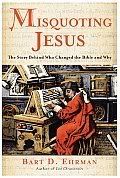
When I first heard about this book I was excited. Finally, a well-researched book on textual criticism written for laymen! Although I was well aware of Ehrman's liberal views, I didn't think this would affect the factual and historical issues related to this subject; and it didn't. Bart Ehrman may very well be one of the foremost authorities on this subject alive today. And I think those who dismiss Ehrman's work without reading it need to give him more credit.
One thing I learned from this book is that liberals CAN do research. I don't care how conservative you are (I am very conservative myself), the historical and factual observations in this work are to be commended. And this brings up a very important point: fundamentalists (in any sense of the word) should not automatically dismiss the work of unbelievers. Too often I encounter those who refuse to buy or even read books like "Misquoting Jesus" simply because they would be "supporting the anti-Christian work of unbelievers." Does Bart Ehrman present conclusions in his books that are simply exaggerated and unreasonable? Yes. Does this mean we should conclude that Bart Ehrman is an apostate who can't do good historical research? No.
The first 5 chapters of this book were excellent. They were based upon true historical research and were almost completely void of Ehrman's presuppositional conclusions that we find in the concluding chapter. I really appreciated the introductory chapter because it allowed the reader to understand exactly where Ehrman was coming from. In no way would the reader be able to start this work and be deceived into thinking that the author was somehow hiding his bias. For example, we read on page 11,
"If one wants to insist that God inspired the very words of scripture, what would be the point if we don't have the very words of scripture...for I came to realize that it would have been no more difficult for God to preserve the words of scripture than it would have been for him to inspire them in the first place. If he wanted his people to have his words, surely he would have given them to them (and possibly even given them the words in a language they could understand, rather than Greek and Hebrew). The fact that we don't have the words surely must show, I reasoned, that he did not preserve them for us. And if he didn't perform that miracle, there seemed to be no reason to think that he performed the earlier miracle of inspiring those words."
I think anyone reading Erhman's words here can see where he is coming from. In essence, he is saying, "unless God transmits the scriptures in a way that is in accordance with my presuppositions, they couldn't possibly have been inspired." Can you imagine the implications of this view? Think about what it would be like if the scriptures were transmitted in the way that Erhman would have preferred;
Take, for example, a monk who is copying the gospel of John. It is about 20 degrees outside and his fire is about to go out. And not only that, but the last meal he ate was about 12 hours ago. His hands are shaking. He is tired. It is late. He knows that if he doesn't get this done tonight...well, it better get finished. Then it happened...he is so exhausted that he accidentally skips a line because it looked so much like the previous one (yes, this happens to all of us...even on computers). And then, "ZZAAPPP!!!!!!" Lightening from the heavens strikes him dead. If this copy of the Gospel of John had been released, then we would have had...yes friends, you guessed correctly, a textual variant!
No matter how easy it would be to dismiss the variant as a simple copyist error, this couldn't happen if Bart Ehrman's view on "inspiration" is true. Do you see the implications of this? God would have to either strike every monk dead who accidentally misspelled a word or copied a line twice, or he would have to temporarily turn them into human dictation machines (now think about THAT!).
Now, I want to be fair to Ehrman. If it weren't for the so-called "theologically motivated alterations" of the texts (such as Luke 5:43-44, according to Ehrman), I don't think that his view on inspiration wouldn't be as radical as they are. But because these changes could have happened (or did happen according to Ehrman), it couldn't be the way God wanted to do it. And it must be emphasized that in the vast majority of cases we know what the original reading was, whether or not the variant was accidental or intentional. So in most of these cases the question is not, "what did the original texts say," but, "was the change accidental or intentional?"
I felt that Ehrman was quite fair in dealing with these variants, but what I don't understand is this; if Bart Erhman believes that it is at least possible to know what the original authors wrote (he claims on p. 210, "A number of scholars...have even given up thinking that it makes sense to talk about the 'original' text. I personally think that opinion may be going too far...so at least it is not "non"-sense to talk about an original text."), why should we conclude that God couldn't have inspired these books? Yes, God used fallible men to copy the scriptures. But isn't it remarkable that in at least 99 percent of the cases (its probably a lot higher, but I'll be generous to the liberals), and out of over 5,000 Greek manuscripts, we know with complete certainty what the original authors wrote down? In addition, those places where it is difficult to determine the original reading, we must keep in mind that we HAVE the original reading; it's in the texts. We just have to choose which text has the original reading.
So the next time someone tells you, "show me the writings of Paul," just pull out a Nestle-Aland 27th edition and a United Bible Society 4th edition Greek New Testament and hand it to him or her. The original writings of Paul are there. We just have to determine what they are (which I must emphasize again; we KNOW what they are AT LEAST 99 percent of the time).
Now, I want to come back to something I mentioned earlier. Many Christians are ignorant, willingly or unintentionally, of these issues. If you see "Misquoting Jesus" as complete trash that shouldn't be read by Christians, then you either a) haven't read the book, or b) are ignorant of textual criticism. Yes, Bart Ehrman's conclusions are far fetched and his presuppositions completely unreasonable. But this makes up a very small percentage of the book. The rest is very excellent, well researched history (and well written, I might add). With this, I want to conclude this review on an encouraging note Christians who are un-informed on this issue.
So let's face it, many of us don't know how we got the Bible. We like to believe that our leather-bonded NIV study Bible magically fell from the heavens into your friendly neighborhood Christian bookstore. We don't like to believe that most Christians in the early church didn't have complete Bibles (considering it was very expensive and often times illegal) and that the copying process was done by hand in a very painstaking way. With this we can somewhat sympathize with Ehrman; if God miraculously inspired the original writings of the texts, why couldn't he have miraculously transmitted them as well (some actually believe that God did this in the King James version of the Bible)? Could Erhman be right? If he is wrong, then why is he wrong?
If you are a Christian, ask yourself, "where did my NIV study Bible come from? Does it matter?" Should you simply trust those who translated your Bible; that they were infallible in choosing which variant readings were the best? How do YOU know that your Bible contains the original readings? For example, how many times have you heard a sermon preached on the woman being caught in adultery (John 8:3-11) with Jesus forgiving her? Bart Ehrman and many other scholars (some even conservative) have concluded that this story wasn't the original reading. Or how about 1 John 5:7, which reads, "For there are three that bear record in heaven, the Father, the Word, and the Holy Ghost: and these three are one." Try to find this verse in your NIV; it's not there. But it's in the KJV. Why? This verse clearly attests to the Trinity. Does it matter if God is three persons that share one being? King James onlyists insist that the King James Bible is God's very words preserved for us in the English language and that all "new" versions, such as the NIV, are corrupt. Are they right? Do you see the implications?
Books like "Misquoting Jesus" are very important and contain information that every Christian needs to be concerned about. So I just want to encourage you, Christian or not, to look into these issues. You don't have to have a Master's degree in Greek exegesis to be informed on these issues. All you need is a desire to study. Don't take my word for it. Don't take Bart Ehrman's word for it. Don't take the KJV translator's word for it. And don't take your pastor's word for it. Study this issue for yourself. The implications and consequences may be eternal.
When I first heard about this book I was excited. Finally, a well-researched book on textual criticism written for laymen! Although I was well aware of Ehrman's liberal views, I didn't think this would affect the factual and historical issues related to this subject; and it didn't. Bart Ehrman may very well be one of the foremost authorities on this subject alive today. And I think those who dismiss Ehrman's work without reading it need to give him more credit.
One thing I learned from this book is that liberals CAN do research. I don't care how conservative you are (I am very conservative myself), the historical and factual observations in this work are to be commended. And this brings up a very important point: fundamentalists (in any sense of the word) should not automatically dismiss the work of unbelievers. Too often I encounter those who refuse to buy or even read books like "Misquoting Jesus" simply because they would be "supporting the anti-Christian work of unbelievers." Does Bart Ehrman present conclusions in his books that are simply exaggerated and unreasonable? Yes. Does this mean we should conclude that Bart Ehrman is an apostate who can't do good historical research? No.
The first 5 chapters of this book were excellent. They were based upon true historical research and were almost completely void of Ehrman's presuppositional conclusions that we find in the concluding chapter. I really appreciated the introductory chapter because it allowed the reader to understand exactly where Ehrman was coming from. In no way would the reader be able to start this work and be deceived into thinking that the author was somehow hiding his bias. For example, we read on page 11,
"If one wants to insist that God inspired the very words of scripture, what would be the point if we don't have the very words of scripture...for I came to realize that it would have been no more difficult for God to preserve the words of scripture than it would have been for him to inspire them in the first place. If he wanted his people to have his words, surely he would have given them to them (and possibly even given them the words in a language they could understand, rather than Greek and Hebrew). The fact that we don't have the words surely must show, I reasoned, that he did not preserve them for us. And if he didn't perform that miracle, there seemed to be no reason to think that he performed the earlier miracle of inspiring those words."
I think anyone reading Erhman's words here can see where he is coming from. In essence, he is saying, "unless God transmits the scriptures in a way that is in accordance with my presuppositions, they couldn't possibly have been inspired." Can you imagine the implications of this view? Think about what it would be like if the scriptures were transmitted in the way that Erhman would have preferred;
Take, for example, a monk who is copying the gospel of John. It is about 20 degrees outside and his fire is about to go out. And not only that, but the last meal he ate was about 12 hours ago. His hands are shaking. He is tired. It is late. He knows that if he doesn't get this done tonight...well, it better get finished. Then it happened...he is so exhausted that he accidentally skips a line because it looked so much like the previous one (yes, this happens to all of us...even on computers). And then, "ZZAAPPP!!!!!!" Lightening from the heavens strikes him dead. If this copy of the Gospel of John had been released, then we would have had...yes friends, you guessed correctly, a textual variant!
No matter how easy it would be to dismiss the variant as a simple copyist error, this couldn't happen if Bart Ehrman's view on "inspiration" is true. Do you see the implications of this? God would have to either strike every monk dead who accidentally misspelled a word or copied a line twice, or he would have to temporarily turn them into human dictation machines (now think about THAT!).
Now, I want to be fair to Ehrman. If it weren't for the so-called "theologically motivated alterations" of the texts (such as Luke 5:43-44, according to Ehrman), I don't think that his view on inspiration wouldn't be as radical as they are. But because these changes could have happened (or did happen according to Ehrman), it couldn't be the way God wanted to do it. And it must be emphasized that in the vast majority of cases we know what the original reading was, whether or not the variant was accidental or intentional. So in most of these cases the question is not, "what did the original texts say," but, "was the change accidental or intentional?"
I felt that Ehrman was quite fair in dealing with these variants, but what I don't understand is this; if Bart Erhman believes that it is at least possible to know what the original authors wrote (he claims on p. 210, "A number of scholars...have even given up thinking that it makes sense to talk about the 'original' text. I personally think that opinion may be going too far...so at least it is not "non"-sense to talk about an original text."), why should we conclude that God couldn't have inspired these books? Yes, God used fallible men to copy the scriptures. But isn't it remarkable that in at least 99 percent of the cases (its probably a lot higher, but I'll be generous to the liberals), and out of over 5,000 Greek manuscripts, we know with complete certainty what the original authors wrote down? In addition, those places where it is difficult to determine the original reading, we must keep in mind that we HAVE the original reading; it's in the texts. We just have to choose which text has the original reading.
So the next time someone tells you, "show me the writings of Paul," just pull out a Nestle-Aland 27th edition and a United Bible Society 4th edition Greek New Testament and hand it to him or her. The original writings of Paul are there. We just have to determine what they are (which I must emphasize again; we KNOW what they are AT LEAST 99 percent of the time).
Now, I want to come back to something I mentioned earlier. Many Christians are ignorant, willingly or unintentionally, of these issues. If you see "Misquoting Jesus" as complete trash that shouldn't be read by Christians, then you either a) haven't read the book, or b) are ignorant of textual criticism. Yes, Bart Ehrman's conclusions are far fetched and his presuppositions completely unreasonable. But this makes up a very small percentage of the book. The rest is very excellent, well researched history (and well written, I might add). With this, I want to conclude this review on an encouraging note Christians who are un-informed on this issue.
So let's face it, many of us don't know how we got the Bible. We like to believe that our leather-bonded NIV study Bible magically fell from the heavens into your friendly neighborhood Christian bookstore. We don't like to believe that most Christians in the early church didn't have complete Bibles (considering it was very expensive and often times illegal) and that the copying process was done by hand in a very painstaking way. With this we can somewhat sympathize with Ehrman; if God miraculously inspired the original writings of the texts, why couldn't he have miraculously transmitted them as well (some actually believe that God did this in the King James version of the Bible)? Could Erhman be right? If he is wrong, then why is he wrong?
If you are a Christian, ask yourself, "where did my NIV study Bible come from? Does it matter?" Should you simply trust those who translated your Bible; that they were infallible in choosing which variant readings were the best? How do YOU know that your Bible contains the original readings? For example, how many times have you heard a sermon preached on the woman being caught in adultery (John 8:3-11) with Jesus forgiving her? Bart Ehrman and many other scholars (some even conservative) have concluded that this story wasn't the original reading. Or how about 1 John 5:7, which reads, "For there are three that bear record in heaven, the Father, the Word, and the Holy Ghost: and these three are one." Try to find this verse in your NIV; it's not there. But it's in the KJV. Why? This verse clearly attests to the Trinity. Does it matter if God is three persons that share one being? King James onlyists insist that the King James Bible is God's very words preserved for us in the English language and that all "new" versions, such as the NIV, are corrupt. Are they right? Do you see the implications?
Books like "Misquoting Jesus" are very important and contain information that every Christian needs to be concerned about. So I just want to encourage you, Christian or not, to look into these issues. You don't have to have a Master's degree in Greek exegesis to be informed on these issues. All you need is a desire to study. Don't take my word for it. Don't take Bart Ehrman's word for it. Don't take the KJV translator's word for it. And don't take your pastor's word for it. Study this issue for yourself. The implications and consequences may be eternal.
Subscribe to:
Posts (Atom)

 Posts
Posts


